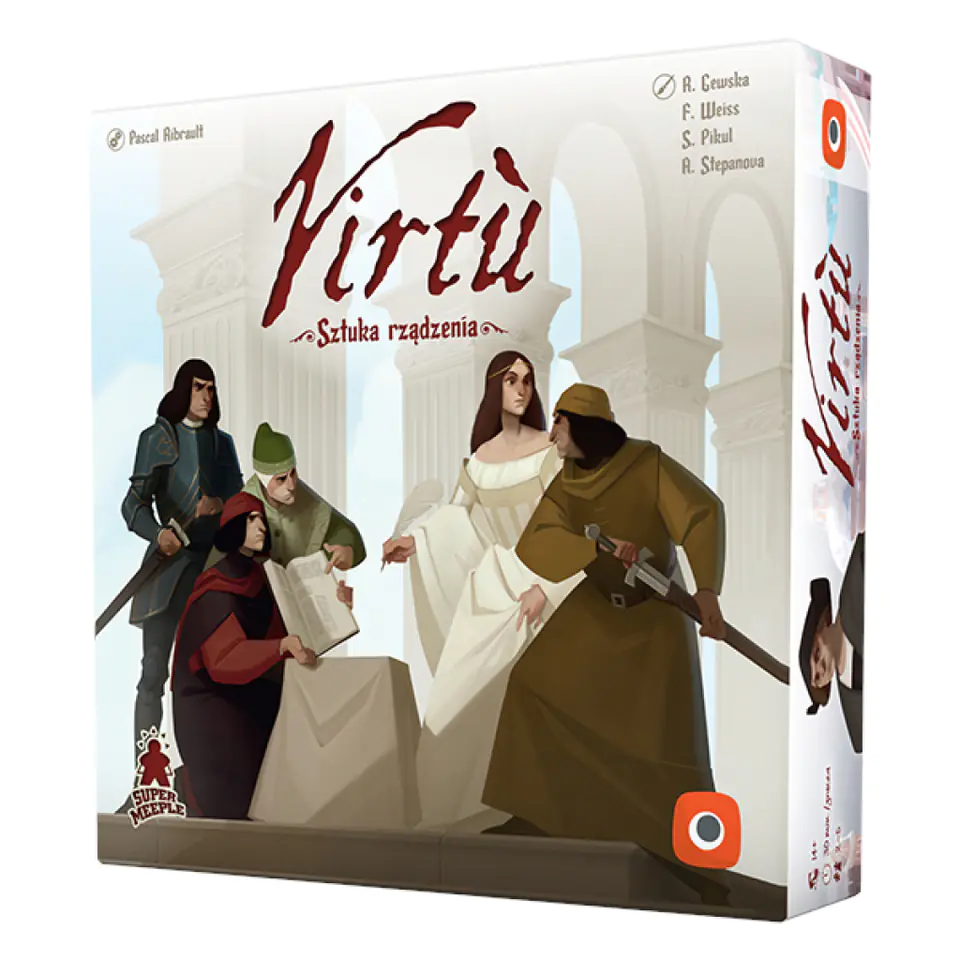
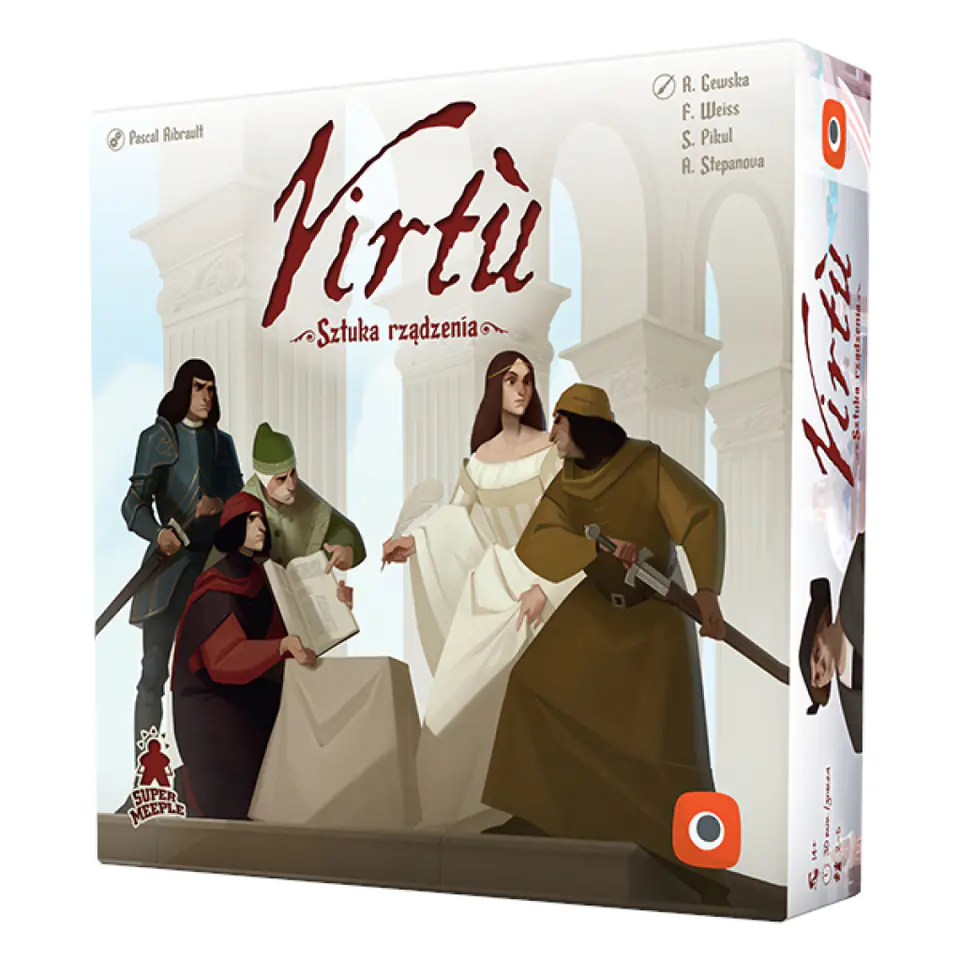
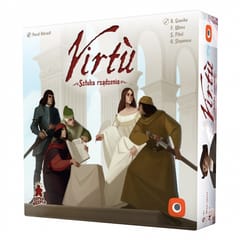
Virtu game
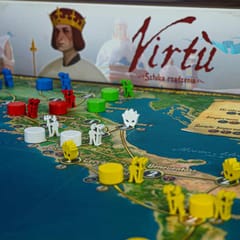
- An expansive area control strategy set in the world of Renaissance Italy.
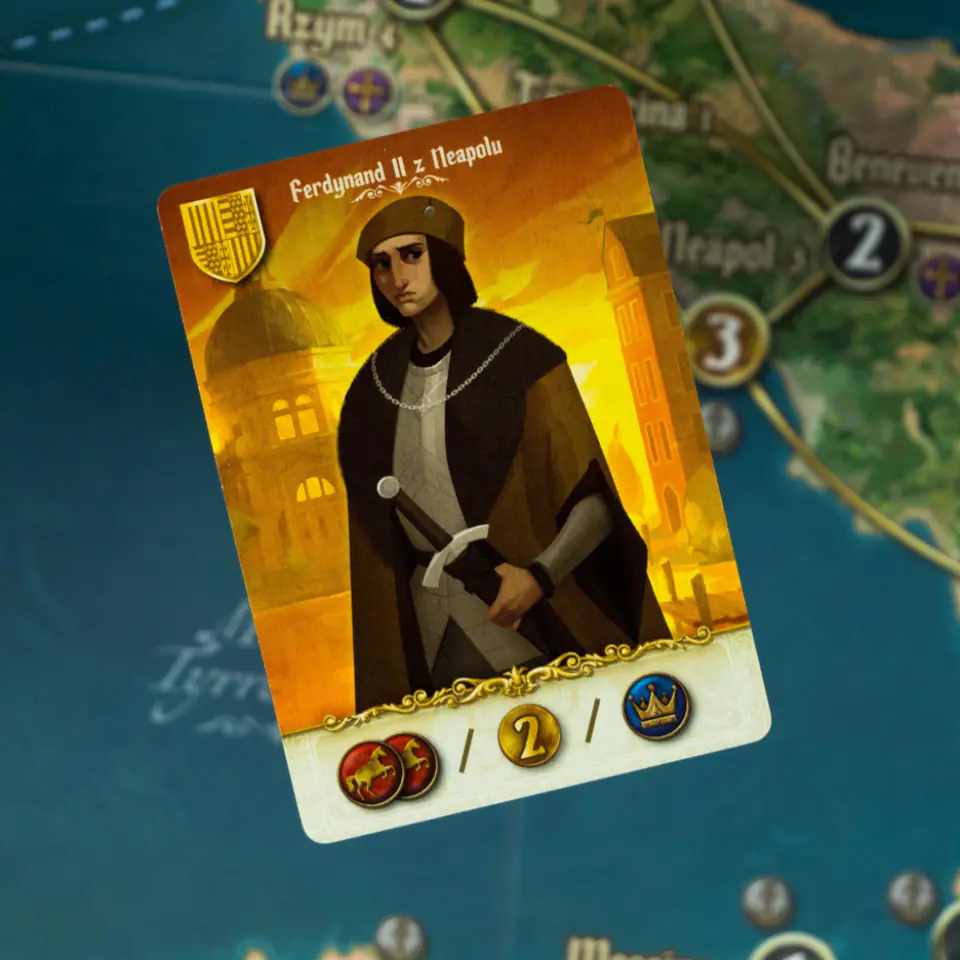
- Stand at the head of Florence, Naples or Rome, take care of the arts, the economy and the military and make your city the hegemon of 16th century Italy.
- Asymmetrical gameplay, a pool of variable actions and multiple paths to victory.
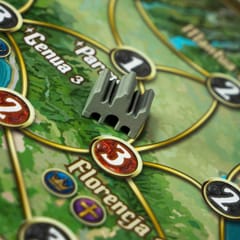
Virtu is an expansive, strategic area control game set in the atmosphere of Renaissance Italy. The turn of the 15th and 16th centuries. Columbus discovers America, Vasco da Gama arrives in India, Copernicus writes his work On the Revolutions of the Celestial Spheres and Michelangelo attempts to create the frescoes in the Sistine Chapel. During this time of discovery and emerging humanism, Italy plays a special role. The influence of the great powers has declined on the Apennine peninsula, and the city-states of that region Florence, Venice, Milan, Rome and Naples enter the struggle for dominance. As their leaders, you will face the challenge of making them local powers. Manage your city, taking care to develop its economy, culture and military. Present yourself as a Renaissance man, be a patron of the arts and assert your rights through diplomacy. However, if need be, do not be afraid to use force, as sometimes it is the only way to achieve the desired result. Virtu is an asymmetrical game. Here, each of the five available factions has its own strengths and weaknesses. There are many paths to victory and the elements of randomness are virtually non-existent.
Family prestige
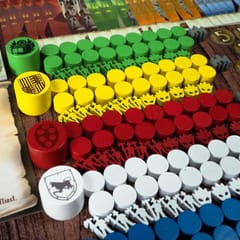
When you join a game of Virtu, you will be at the head of one of five powerful dynasties: The Aragones of Naples, the Sforzas of Milan, the Medici of Florence, the Genoese of Venice or the Borgias of Rome. Your overarching goal will become to have as many Prestige Points as possible, which you will earn in turn for: Cities controlled, conduct on the Patronage track, level of Religious Influence, Military Trophies won, Political Alliances with the Great Powers (Kingdom of France, Ottoman Empire, Holy Roman Empire) and the action of certain cards and tiles.
Chambers and Vestibules
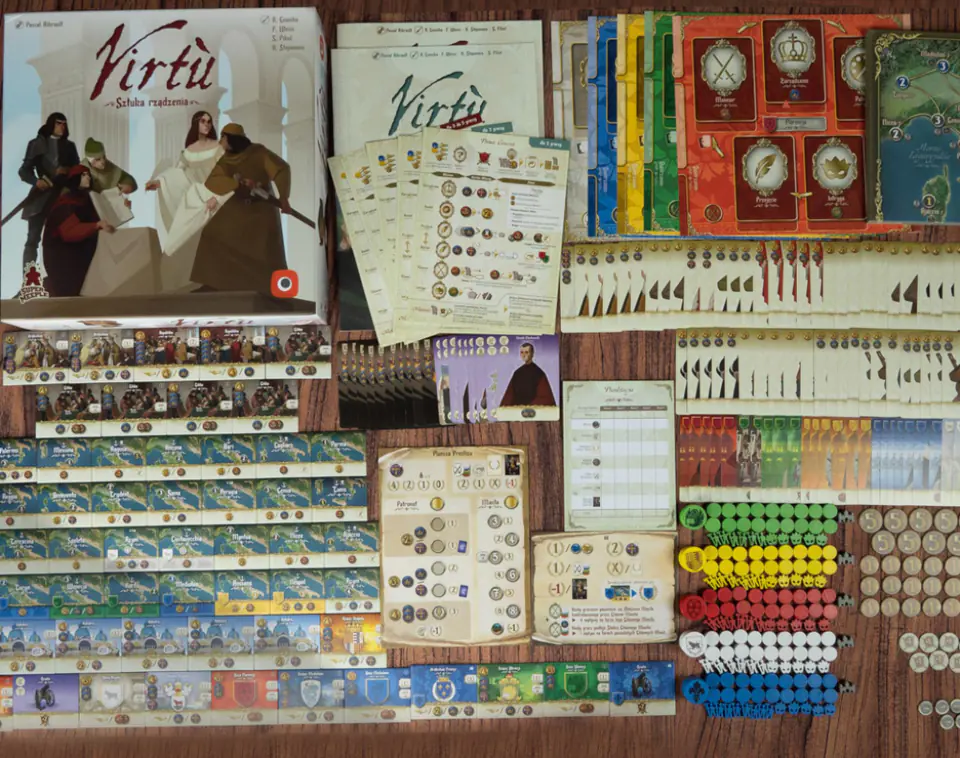
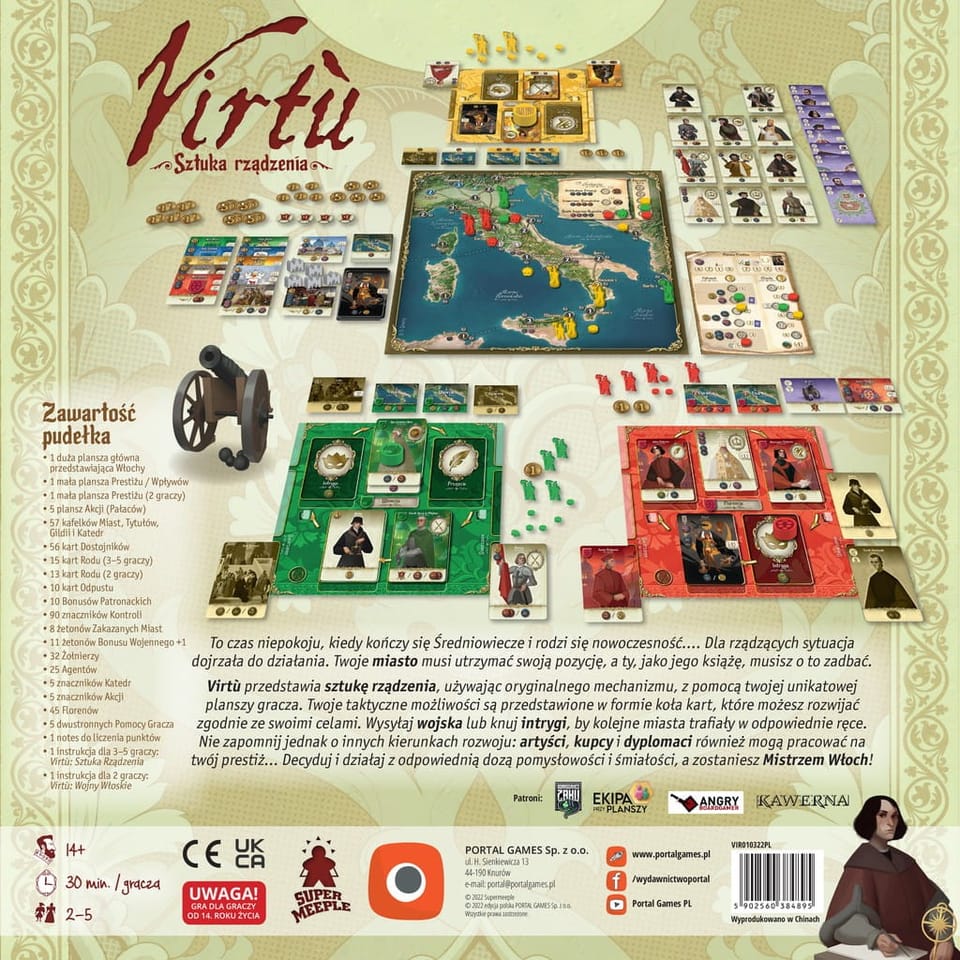
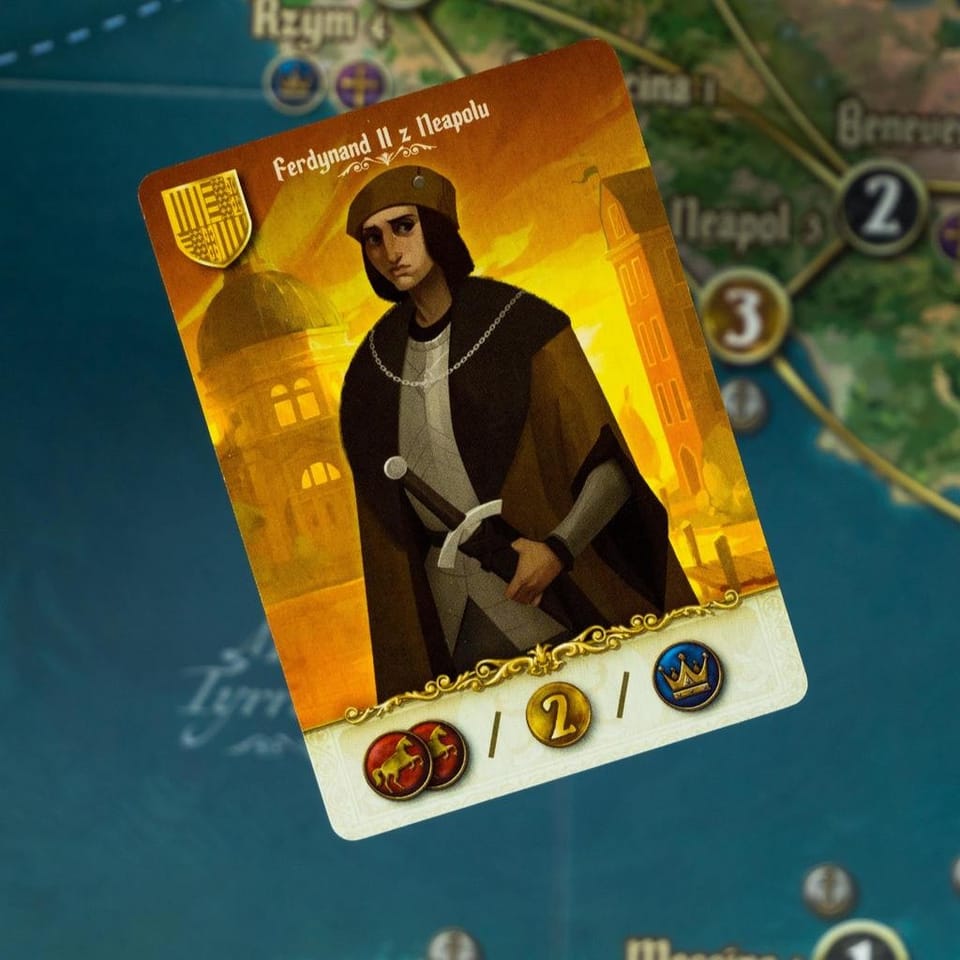
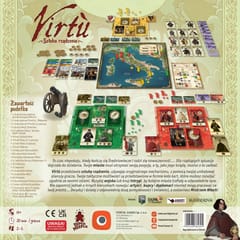
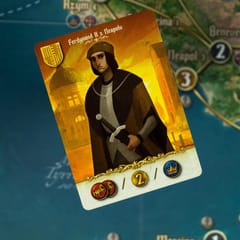
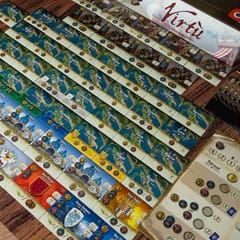
The game is divided into Years (rounds), consisting of two phases. During Spring, you perform actions and then consider Sieges and determine the Order of the Turn. In Winter, on the other hand, you pay your pay, recruit Soldiers and form Alliances. The centres of your command will become Palaces, or Action boards, which display Chambers with actions printed on them: Stewardship, Patronage, Trade, Acquisition, Manoeuvre and Intrigue. At the edges of the boards are the Vestibules, where you will place the acquired Courtier cards. In turn, the acquired tiles will go above your boards into what is known as the Sphere of Influence.
Managing an empire
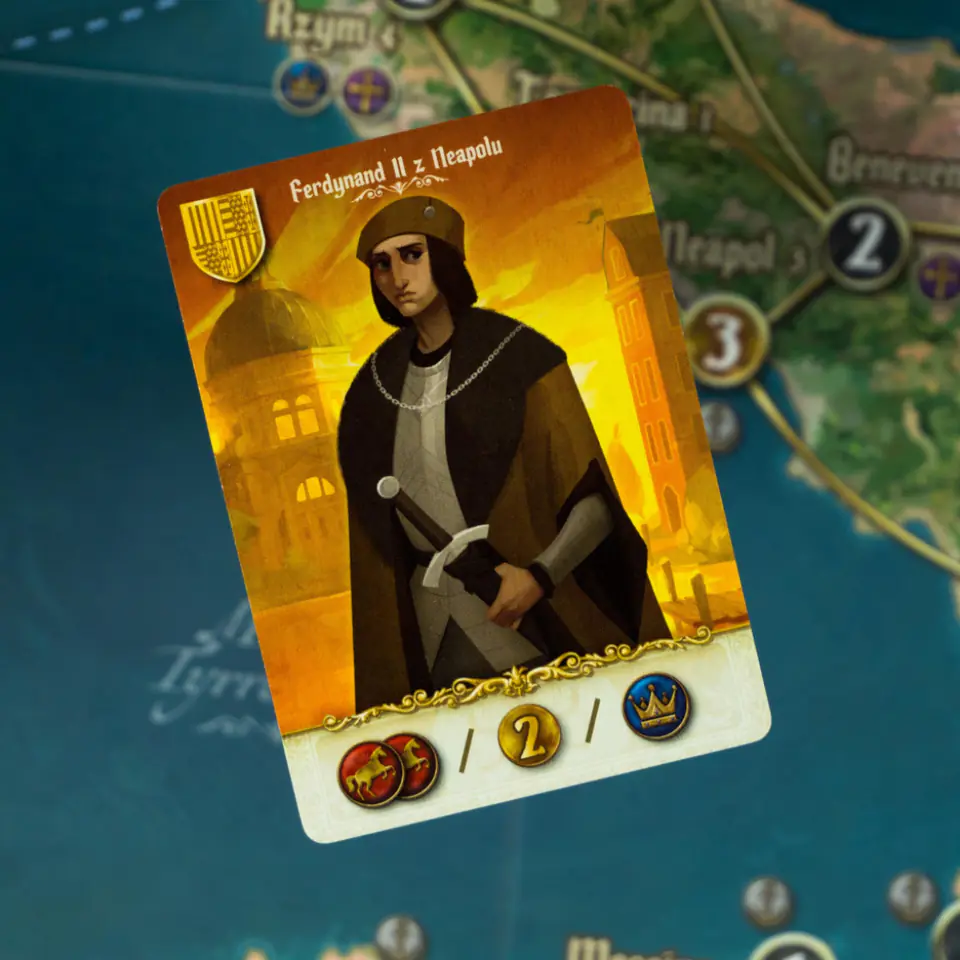
At the start of the Spring phase, you move the Action marker by up to 2 squares from one Chamber to another by performing the action assigned to that Chamber. For each action you need specific resources, such as Florens, Crowns, Crosses or Ships. You will acquire these resources from tiles or cards found in the Chambers themselves (Action and Improvement cards). If you run out of resources, you can use those on the Courtiers cards and then turn them over to the exhausted side. The Courtiers will become active again when you visit them, which is when the Action marker passes their Vestibule.